Citroën AEBS Safety System Failed, Endangering My Family's Lives!

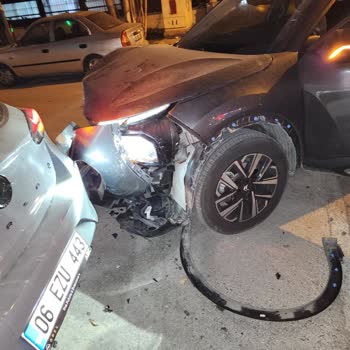
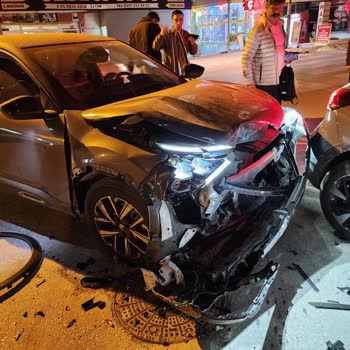
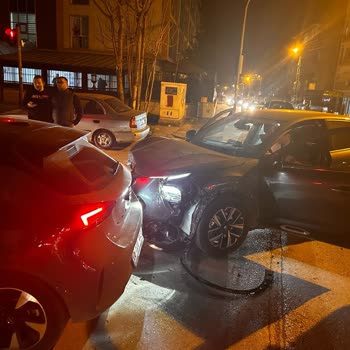
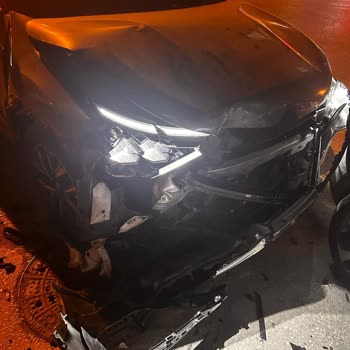
I am the owner of a 2024 model Citroën C5 Aircross 1.5 BlueHDi Shine Bold, which I purchased brand new from İstanbul Öztek Kartal on 20 February 2025. The vehicle currently has only 8,840 km on the odometer and was chosen specifically as a safe family car due to its heavily marketed advanced safety features, especially the Active Emergency Braking System (AEBS). On 2 June 2026, while driving with my wife and infant daughter, we were involved in a traffic accident. At the time of the incident, I was travelling within a speed range of 50–60 km/h, which is exactly within the operating band that Citroën’s own documentation and marketing materials emphasize for the AEBS. Despite this, the system failed completely: it did not issue any visual or audible warning and did not engage the brakes even for a moment. In other words, the system simply “watched” the accident happen and did not intervene at all, directly endangering the lives of my family. After the accident, the vehicle was taken to the Öztek Samandıra Damage Center, and Damage File No: 4200791580-1 was opened on the morning of 2 June 2026. Up to this moment, neither the authorized service at Öztek Samandıra nor Citroën customer service has provided any written or verbal explanation as to why the AEBS system did not operate during the accident. I have only been informed that the vehicle has been registered and the damage file has been opened; no information has been shared with me about any detailed technical diagnosis, ECU log analysis, or sensor data review. I am still strictly awaiting their official technical investigation and response. As a Mechanical Engineer and the owner of this vehicle, I do not accept minor, superficial, or temporary solutions for a defect that has directly put the lives of my wife and infant daughter at serious risk. A core active safety system that is advertised as a life-saving feature has failed to operate within its claimed speed limits, which in my view constitutes a fundamental manufacturing and/or software defect and falls under the scope of a latent defect. My expectations from Citroën are very clear. First, I demand either a one-to-one replacement of the vehicle with an equivalent brand-new Citroën C5 Aircross or a full refund based on the current market value of the vehicle. Second, before any repair or commercial negotiation, Citroën must extract the ECU and radar/camera module log records and provide me with an official, signed, and technically detailed report from Citroën headquarters, including, if necessary, France, that scientifically explains why the AEBS system remained completely unresponsive during the crash. If, despite this obvious and critical safety failure, a replacement or full refund is not immediately initiated and a repair is imposed on me, I expect Citroën to fully compensate the substantial loss of value that the vehicle will inevitably suffer, to provide a comprehensive extended warranty covering the entire technological and mechanical infrastructure, and to immediately supply me with an equivalent segment courtesy car for the full duration of the process. If Citroën attempts to downplay this life‑threatening system failure as a simple bodywork repair and does not meet these explicit demands, I will pursue my rights through the Consumer Courts and seek both a full refund and compensation for my material and moral damages. I am sharing this complaint so that other consumers are also made aware of this serious safety defect in a vehicle that is marketed and sold as a safe family car.